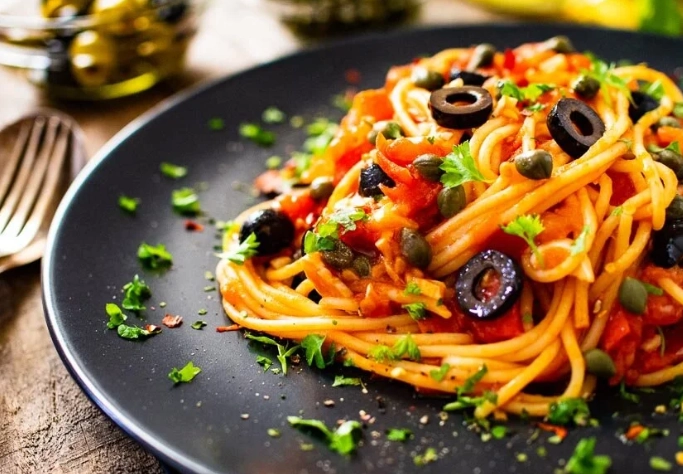
The Ultimate Homemade Italian Pasta Recipe by Hand: A Complete Guide
Quick Navigation
Let's be honest. The first time I tried making a homemade Italian pasta recipe by hand, it was a disaster. The dough was either too sticky or cracked like a desert floor. The noodles were thick in some spots, paper-thin in others. It looked nothing like the silky ribbons of pasta I'd had in Rome. But that's the thing about learning – you mess up, you learn, you get better. And now, after years of practice (and many, many imperfect batches), I want to save you the headache and share everything I wish I'd known from the start.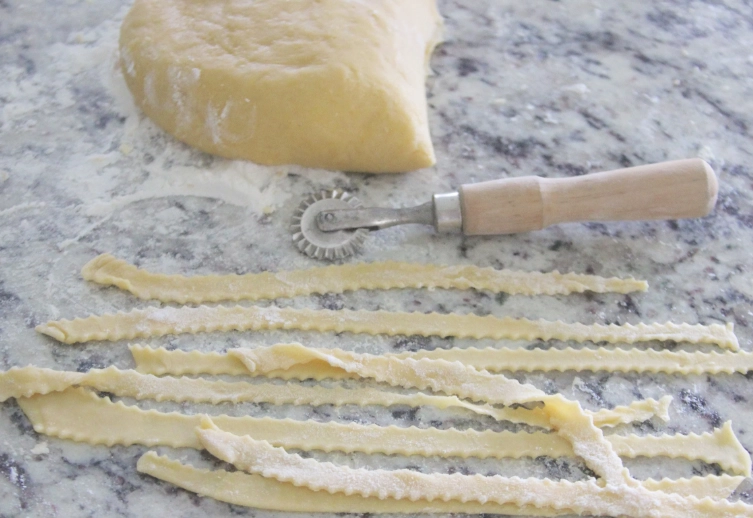
Making pasta from scratch isn't just about following steps. It's about feel, intuition, and understanding the why behind each action. Why this flour? Why rest the dough? Why roll it to a certain thickness? This guide isn't just a recipe; it's the full story.
We'll walk through the entire process, from choosing your ingredients to drying and cooking your perfect noodles. I'll also tackle all those nagging questions that pop up when you're covered in flour. Ready to get your hands dirty?
Why Bother Making Pasta by Hand?
In a world of instant everything, why spend an hour making something you can buy for two dollars? The answer is in the first bite. The texture of fresh pasta is entirely different from dried. It's tender, with a delicate chew that holds sauce in a way dried pasta just can't. There's a satisfaction in the process itself, too – a tactile, almost meditative rhythm to kneading and rolling.
Economically, it's cheaper than buying high-quality fresh pasta from a specialty store. But the real value is in the craft. You control the ingredients (no preservatives, no additives), the thickness, the shape. It becomes your pasta.
Honestly, it's not always faster than boiling dried pasta. But on a slow Sunday afternoon, with some music on and a glass of wine nearby, it becomes more than cooking. It's an experience.
The Foundation: Ingredients & Tools You Actually Need
Many guides overcomplicate this. You don't need a fancy Italian grandmother or a kitchen full of gadgets. Let's break down what's essential and what's just nice to have.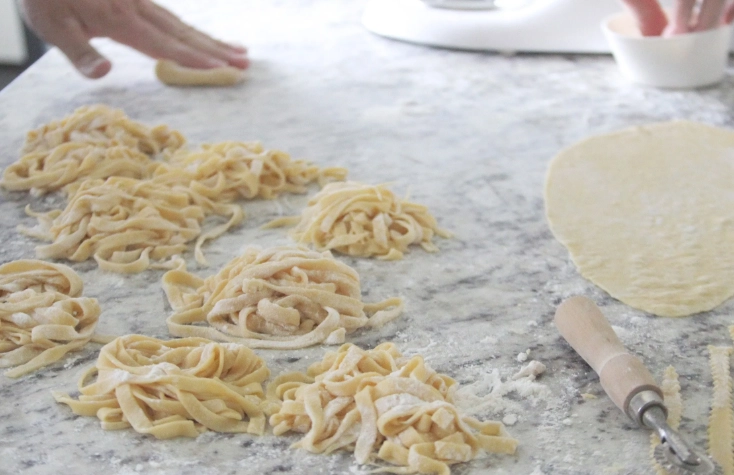
The Flour Dilemma: Tipo 00, Semolina, or All-Purpose?
This is where most people get stuck. The truth is, you can make great pasta with different flours, but they yield different results.
- Tipo 00 Flour: This is the gold standard for many Italian pasta makers. It's a very finely milled soft wheat flour with a low protein content (around 11-12%). It creates a smooth, silky, and tender dough that's easy to roll thin. It's perfect for egg-based pasta like tagliatelle or pappardelle. If you want authenticity, start here. You can find it in well-stocked supermarkets or online.
- Semolina Flour: Made from durum wheat, it's coarser and higher in protein. It gives pasta a beautiful yellow color and a firm, hearty bite. It's traditionally used for dried pasta shapes and eggless pasta from Southern Italy (like orecchiette). It can be trickier to work with alone as it absorbs liquid slowly. A blend is often best for beginners.
- All-Purpose Flour: Your reliable kitchen staple. It works! The pasta will be slightly chewier and less delicate than with Tipo 00, but it's a fantastic and accessible starting point. Don't let the lack of "special" flour stop you from trying a homemade Italian pasta recipe by hand.
My personal favorite for a balanced, foolproof dough? A 50/50 blend of Tipo 00 and fine semolina. You get the smoothness of the 00 with the structure and golden hue from the semolina.
Eggs: Size Matters, But Not That Much
Large eggs are the standard. Fresh, room-temperature eggs blend into the flour more easily. The yolk provides fat, richness, and color. Some traditional recipes use only yolks for an incredibly rich pasta (pasta all'uovo), but whole eggs give a great balance. For every 100 grams of flour, you'll typically use 1 large egg. It's a ratio, not a rigid rule.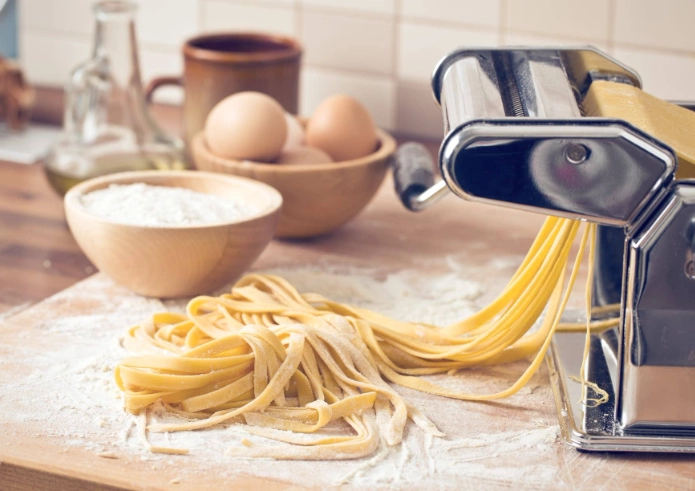
Essential vs. Optional Tools
You can start with almost nothing. Really.
| Tool | Category | Why You Need It (Or Don't) | Budget-Friendly Alternative |
|---|---|---|---|
| Large Wooden Board or Counter | Essential | Provides a porous surface for kneading. A clean, dry countertop works perfectly. | Your kitchen counter (clean it well!). |
| Bench Scraper | Highly Recommended | Invaluable for gathering sticky dough, cleaning flour, and portioning. A small investment with big returns. | A firm, flat spatula or even a dull knife. |
| Long Rolling Pin | Essential | A standard pin works, but a long, thin Italian "mattarello" (around 3cm diameter, 80-100cm long) gives superior control for rolling large, even sheets. | Any rolling pin you have. A wine bottle in a pinch! |
| Pasta Cutter or Sharp Knife | Essential | A fluted pastry wheel (rotella) for decorative edges on tagliatelle, a sharp chef's knife for clean cuts. | A very sharp knife is non-negotiable for clean cuts. |
| Pasta Machine (Hand-Crank) | Optional / Game-Changer | Not traditional for "by hand," but it guarantees perfectly even thickness with less effort. Great for beginners to build confidence. | Stick with the rolling pin for the authentic "by hand" feel. |
| Drying Rack or Clean Space | Essential | Pasta needs to air-dry slightly before cooking or storing. A rack maximizes airflow. | The back of kitchen chairs, a clean clothes drying rack, or a floured baking sheet. |
See? No crazy equipment. The most important tool is your own hands.
The Step-by-Step Process: From Flour to Noodle
Okay, let's make pasta. This is the core homemade Italian pasta recipe by hand. We'll make a basic egg dough for cut noodles like fettuccine.
Step 1: The Mound & Well Method (La Fontana)
On your large board or counter, pour 300 grams of your chosen flour (or blend). Make a big mound. Then, using your fingers, create a wide, crater-like well in the center. The walls should be high enough to hold the liquid. This well method is classic because it gradually incorporates the wet into the dry.
Crack 3 large eggs (roughly 150g) into the center. Add a pinch of salt. Now, with a fork, start beating the eggs gently, slowly beginning to pull in flour from the inner walls of the well. Go slow. If the dam breaks and egg runs everywhere, just use your bench scraper to herd it back. It's not a crisis.
Step 2: Bringing It Together & The Knead
Once the mixture is shaggy and too thick for the fork, ditch it and use your hands. Bring all the flour into the center, incorporating everything until you have a rough, craggy ball. It will seem dry and impossible. This is normal.
Now, the knead. This isn't bread. You don't need to knead for 15 minutes. You're developing gluten just enough to create a smooth, elastic dough. Use the heel of your hand to push the dough away from you, then fold it back over, give it a quarter turn, and repeat. Do this for about 8-10 minutes.
How do you know it's done? The dough transforms. It goes from rough and crumbly to incredibly smooth, elastic, and slightly shiny. Poke it – it should spring back slowly. If it's still sticky, dust with a tiny bit of flour. If it's cracking and dry (my most common early mistake), dip your fingers in water and knead it in, bit by bit.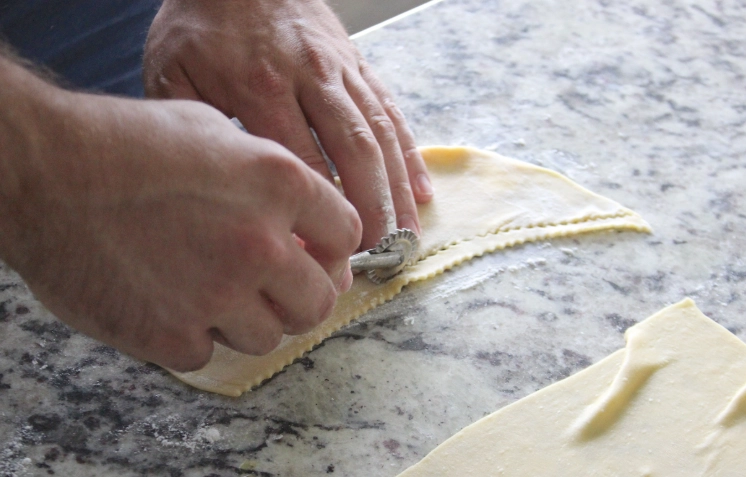
Step 3: The Crucial Rest
Wrap the dough ball tightly in plastic wrap or place it under an upturned bowl. Let it rest at room temperature for at least 30 minutes. This is non-negotiable. The gluten relaxes, making the dough infinitely easier to roll out without springing back. You can even rest it for a few hours in the fridge. This pause is what makes rolling possible.
Step 4: Rolling & Thinning (The Arm Workout)
Unwrap your rested dough. Cut it into quarters. Work with one piece at a time, keeping the others covered.
Lightly flour your surface and rolling pin. Flatten the dough piece with your hands into a thick disc. Start rolling from the center outwards, applying even pressure. Turn the dough frequently (a quarter turn after a few rolls) to maintain an even circle or oval. This prevents it from sticking and ensures even thickness.
Your goal is to get it thin enough that you can vaguely see the shadow of your hand through it. For tagliatelle, you want it quite thin – about 1-1.5mm. It takes effort. Don't be afraid to put some shoulder into it. If it starts to shrink back, let it rest for 5 minutes covered with a towel. It's telling you the gluten is too tight.
Step 5: Cutting & Drying
Once your sheet is rolled, lightly dust it with flour or semolina. Loosely fold it over itself into a loose roll, like a Swiss roll. With a sharp knife or pasta cutter, slice across the roll to your desired width. For fettuccine/tagliatelle, about 1cm. For pappardelle, 2-3cm.
Unfurl the cut strands immediately. Toss them with a little more semolina to prevent sticking. You can cook them right away, or lay them on a floured rack or tray to dry for 20-30 minutes. This slight drying helps the pasta hold its shape better in boiling water.
And there you have it – your very own batch of homemade Italian pasta, made completely by hand.
Solving Your Pasta Problems: The FAQ of Frustration
Cooking & Serving Your Masterpiece
Fresh pasta cooks in a flash, so have your sauce ready and your diners at the table.
- Use a large pot of well-salted water (it should taste like the sea).
- No oil in the water. It prevents sauce from sticking to the pasta.
- Fresh pasta cooks in 1-3 minutes. Start tasting after 60 seconds. It's done when it's tender but still has a slight bite (al dente).
- Reserve a cup of the starchy pasta water before draining. This liquid gold is the secret to emulsifying and thickening your sauce, making it cling to every strand.
- Drain the pasta (not too thoroughly) and add it directly to your pan of warm sauce. Toss, toss, toss over low heat, adding splashes of pasta water until the sauce coats everything beautifully. Serve immediately.
For a classic pairing, your fresh tagliatelle is sublime with a rich ragù Bolognese or a simple Alfredo. For resources on traditional sauces, the Academia Barilla offers deep dives into Italian culinary tradition, though their courses are paid, their public resources highlight regional pairings.
Beyond the Basics: Shapes, Flavors & Storage
Once you've mastered the basic sheet and cut noodles, a world opens up.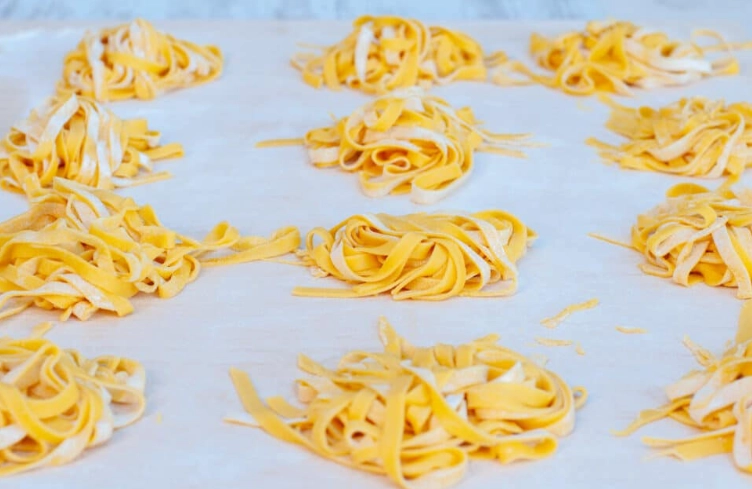
Simple Hand-Shaped Pasta
Maltagliati: Literally "badly cut." Roll your sheet, then cut it into rough, uneven triangles or rectangles. Perfect for hearty bean or vegetable soups.
Pizzicotti: So simple. Pinch off tiny pieces of dough (the size of a pea) and roll them briefly between your fingers. Great in broths.
Adding Flavor & Color
Incorporate flavors into the dough itself. For spinach pasta, blend cooked, squeezed-dry spinach with the eggs before adding to the flour. For tomato pasta, add tomato paste to the eggs. For squid ink pasta (nero di seppia), add a sachet of squid ink. Start with small amounts (a tablespoon of paste, one sachet of ink) so you don't throw off the dough's hydration.
How to Store Fresh Pasta
To cook later the same day: Leave it on the drying rack, covered loosely with a kitchen towel, for up to 12 hours.
To freeze: After cutting and dusting, arrange portions in a single layer on a parchment-lined baking sheet. Freeze solid (about 2 hours), then transfer to a freezer bag. Cook directly from frozen, adding a minute to the cooking time.
To dry completely: For long strands, dry on a rack in a cool, airy place for 1-2 days until completely brittle. Store in an airtight container. It will now cook like dried store-bought pasta, taking 5-8 minutes. Note: Egg pasta doesn't dry as well for long-term storage as semolina-and-water pasta; it's best fresh or frozen.
Look, the path to mastering a homemade Italian pasta recipe by hand is paved with imperfect, maybe even ugly, batches. My first few were frankly embarrassing. But each one taught me something—about the flour, about the feel, about my own patience. That's the real recipe: flour, eggs, and a willingness to try, fail, and try again.
So clear off your counter, weigh your ingredients, and make that well. Don't stress about perfection. Just enjoy the process of creating something real, something simple, and something incredibly delicious with your own two hands. That's the magic no store-bought box can ever replicate.
Related Articles

Top 10 Italian Foods: The Ultimate List of Must-Try Dishes
Master the Italian Seasoning Ratio: A Chef's Guide to Perfect Blends
Quick Italian Starters: 10 Easy Recipes Ready in 30 Minutes

Authentic Italian Zeppole Recipe: Easy Homemade Fried Dough Guide
Best Italian Regional Recipes: Top 5 Dishes to Master at Home