Italian vs American Braciole: The Real Differences Explained
Quick Guide
So, you're planning a Sunday gravy, or maybe you saw a recipe online that caught your eye. You start digging and suddenly you're faced with a question that seems simple but gets surprisingly complicated: is there a difference between Italian and American braciole? Let me tell you, the answer isn't just a yes or no. It's a journey across the Atlantic, a story of adaptation, and a delicious lesson in how food evolves when it finds a new home.
I remember the first time I made what I thought was braciole. I followed an online recipe from a popular site, pounded some flank steak thin, slathered it with breadcrumbs, cheese, and herbs, rolled it tight, and browned it before letting it simmer in tomato sauce for hours. The house smelled incredible. The result was fork-tender, savory, and everyone raved about it. Then, a few years later, I found myself in a small trattoria in Puglia. I saw "braciole" on the menu and ordered it, expecting the familiar, saucy roll. What arrived were two thin, grilled pork chops. My confusion was total. That's the moment I truly understood that asking is there a difference between Italian and American braciole? is perhaps the most important question you can ask before you start cooking.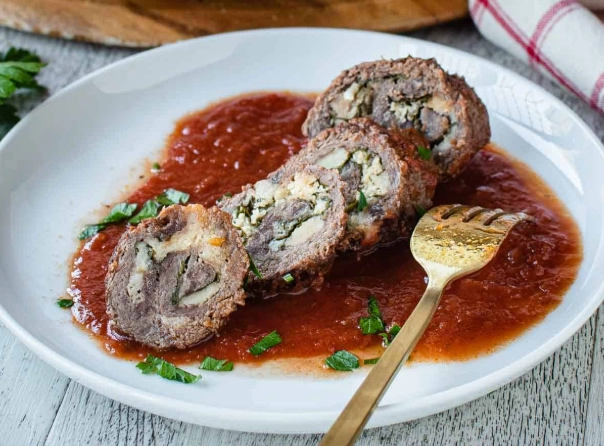
Let's get the pronunciation out of the way first, because even that differs! In Italy, it's pronounced brah-CHOH-leh. In many Italian-American households, you'll hear brah-ZHOOL or brah-SHOOL. That little shift in sound hints at the bigger story.
The Heart of the Matter: Two Dishes, One Name
At its core, the difference is foundational. In Italy, "braciola" (singular) or "braciole" (plural) generally refers to a slice of meat – most often pork, but sometimes beef or veal – that is cooked by grilling, pan-frying, or braising. It can be a chop, a cutlet, or a slice. It's not inherently a stuffed roll. That's a regional variation, primarily from the south.
In America, thanks to the wave of immigrants from Southern Italy (especially Campania, Sicily, and Calabria) in the late 19th and early 20th centuries, "braciole" came to mean one very specific thing: a slice of beef, pounded thin, stuffed with a savory filling, rolled, tied, browned, and slowly simmered in tomato sauce. It became a centerpiece of the Sunday dinner table, a symbol of abundance and family.
So, is there a difference between Italian and American braciole? Absolutely. One is a category of meat preparation; the other is a specific, iconic dish born from Italian-American culture.
Breaking It Down: A Side-by-Side Comparison
To really see the distinction, let's put them head-to-head. This table lays out the key battlegrounds.
| Aspect | Italian Braciole (Traditional/General) | American Braciole (Italian-American) |
|---|---|---|
| Primary Meat | Pork (costine, loin chops) is most common. Also beef (slices of round) or veal in specific regional recipes. | Beef, almost exclusively. Top round, flank steak, or sirloin tip, pounded thin. |
| Cut & Form | Often a single, thin slice or chop. Can be left flat or rolled (in the South). | Always a pounded, flattened slice, stuffed and rolled into a cylindrical bundle. |
| The Filling (If Any) | Usually simple: garlic, parsley, maybe a sprinkle of cheese or breadcrumb. In stuffed versions (e.g., Braciole alla Napoletana), it includes pine nuts, raisins, garlic, parsley. | Hearty, abundant, and variable. A breadcrumb-based mixture with grated cheese (Pecorino Romano/Parmigiano), garlic, parsley, sometimes prosciutto, pine nuts, raisins. |
| Cooking Method | Grilled (alla brace), pan-fried, or quickly braised. Often cooked separately from sauce. | Always braised. Browned, then simmered for 2-3 hours in tomato sauce (the "gravy"). The sauce is the point. |
| Serving Style & Role | Served as a second course (secondo) after pasta, often with a side vegetable. The meat is the star. | Typically served alongside or on top of pasta, with the sauce it cooked in. It's part of a grand, multi-dish family meal. |
| Cultural Context | Everyday meal or trattoria staple. Varies wildly from North to South. | Celebration food for Sundays, holidays, and large family gatherings. A taste of nostalgia. |
Looking at that table, it's pretty clear we're talking about two different culinary experiences. The American version is a project, a labor of love meant to feed a crowd and flavor a giant pot of sauce. The Italian version, in its many forms, is often more straightforward.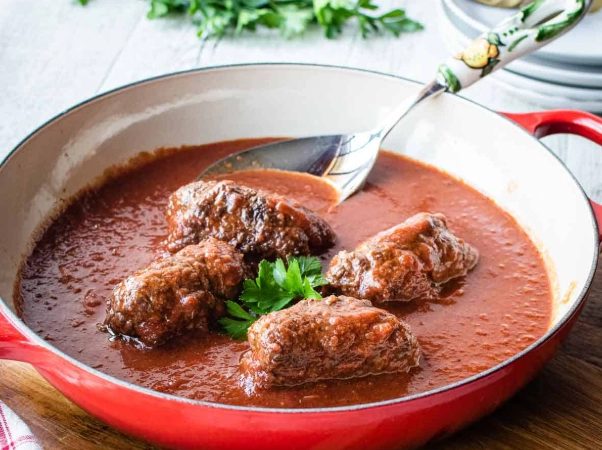
Diving Deeper: The Italian Side of the Story
To understand why the American version exists, you have to look at its roots in Italy. It's not a made-up dish, but a hyper-focused adaptation of a specific regional style.
Regional Variations in Italy
Italy doesn't have one braciole. It has dozens. Asking about the difference between Italian and American braciole means first acknowledging the diversity within Italy itself.
- In the North (Lombardy, Piedmont): Braciola often means a thick, juicy pork chop, usually grilled or pan-fried. Simple. No stuffing, no sauce to speak of.
- In Central Italy (Tuscany): You might find braciole referring to thin slices of beef or pork, sometimes rolled with herbs and braised in a small amount of wine or tomato, but it's still not the stuffed-and-sauced behemoth of the American style.
- In the South (Campania, Sicily, Puglia): Here we get closer. Braciole alla Napoletana is the direct ancestor. It's a thin slice of beef (usually from the round) stuffed with a mixture that often includes pine nuts, raisins, garlic, parsley, and cheese. This sweet-and-savory profile is a hallmark of Sicilian and Neapolitan cooking. It's then rolled, tied, and braised in tomato sauce. Sound familiar?
The American braciole is essentially a descendant of the Neapolitan/Sicilian version, but with key twists. The immigrants who brought this dish over often came from poorer backgrounds. In America, beef (like tougher, cheaper cuts of round) was more affordable and available than it was back home for many. The filling evolved to be more substantial—adding more breadcrumbs stretched the meal further. The long, slow braise in a huge pot of tomato sauce was practical: it fed a big family and tenderized the less expensive cuts of meat. What was a special-occasion dish in parts of Southern Italy became the centerpiece of the Italian-American Sunday dinner tradition.
For a deeper look at the authentic Neapolitan culinary tradition that gave birth to this dish, resources like the Accademia Italiana della Cucina (Italian Academy of Cuisine) provide scholarly insight into regional Italian recipes and their histories.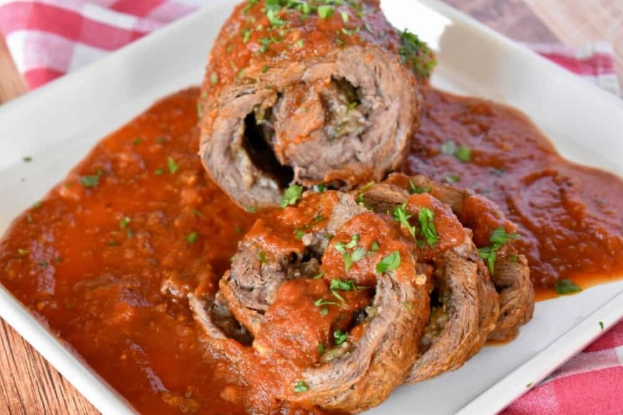
The American Evolution: More Than Just Adaptation
The story of American braciole is a story of making do, then making it iconic. It's a perfect example of culinary evolution.
Let's talk about that filling. The American breadcrumb mixture (we call it the "stuffing") serves multiple purposes:
- It stretches the meat. A little beef goes a lot further when padded out with seasoned breadcrumbs and cheese.
- It creates texture. As it cooks, it doesn't just stay dry inside. It absorbs the meat juices and sauce, becoming a moist, flavorful, almost savory stuffing-like core.
- It thickens the sauce. As the braciole simmers, some of the filling inevitably seeps out, acting as a natural thickener and flavor enhancer for the tomato gravy.
The choice of beef—flank, top round, bottom round—is also key. These are lean, tough cuts with lots of connective tissue. Terrible for quick grilling, but perfect for long, slow, moist cooking. That 3-hour bath in tomato sauce breaks down the collagen, transforming chewy meat into something incredibly tender. This practical choice became a defining characteristic.
And the sauce. Oh, the sauce. In the American method, the braciole isn't just cooked in the sauce; it creates the sauce. The browned meat fond, the rendered fats, the escaping herbs and garlic from the filling—all of it melds with the tomatoes to create something far greater than the sum of its parts. The pasta served with it is almost a vehicle for that sauce. For many, the braciole itself is the bonus, but the enriched, meaty gravy is the prize.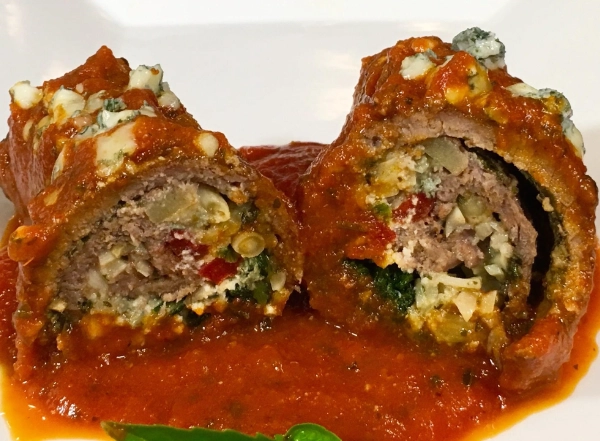
Common Questions (And Some Straight Answers)
Can I use pork to make American-style braciole?
You can, but it changes the character completely. Pork tenderloin or thin boneless chops would cook much faster and wouldn't stand up to the 3-hour braise—they'd turn to mush. If you want a pork version, you'd need to adapt it to a quicker braise, more in line with some central Italian recipes. It wouldn't be the classic Italian-American Sunday gravy braciole.
Which one is more "authentic"?
This is a trap question. Both are authentic to their own context. The Neapolitan version is authentic to Naples. The Italian-American version is authentic to the immigrant experience and the communities that nurtured it. Asking which is more authentic is like asking if New York pizza is less authentic than Neapolitan pizza. They're different branches of the same tree. The American version has its own rich, valid history. For perspectives on authentic Italian-American foodways, institutions like the Food Museum often archive and celebrate these culinary evolutions.
Is the filling supposed to be sweet (with raisins)?
In the direct Neapolitan ancestor, yes, often. The agrodolce (sweet-sour) flavor from raisins and sometimes a touch of vinegar is classic. In many American families, that sweetness was lost over time. My own family's recipe never included raisins—my grandfather hated them. It was garlic, parsley, breadcrumb, Pecorino Romano, and sometimes a bit of prosciutto. Both are correct within their traditions. It's a personal or family preference.
What's the best cut of beef for American braciole?
Top round is the gold standard for many. It's lean, has a good grain for holding together when pounded, and is the perfect thickness. Flank steak works but can be trickier to roll because of its long fibers. Bottom round is also good. Avoid anything already tender like sirloin—it's expensive and will overcook and dry out during the long braise.
Do I have to tie it with string?
Yes. I mean, you can try toothpicks, but for a secure roll that won't unravel during hours of simmering and careful turning, butcher's twine is non-negotiable. It's a bit of a chore, but it's part of the ritual. The good news is, untying it at the table feels like opening a delicious present.
So, Which One Should You Make?
It depends entirely on what you're in the mood for and what meal you're trying to create.
Make an Italian-style braciole if: You want a relatively quick, protein-focused main course. You're grilling or pan-frying. You want to explore the diversity of Italian regional cooking. You're serving a multi-course Italian meal and need a secondo.
Think weeknight dinner with Italian flair.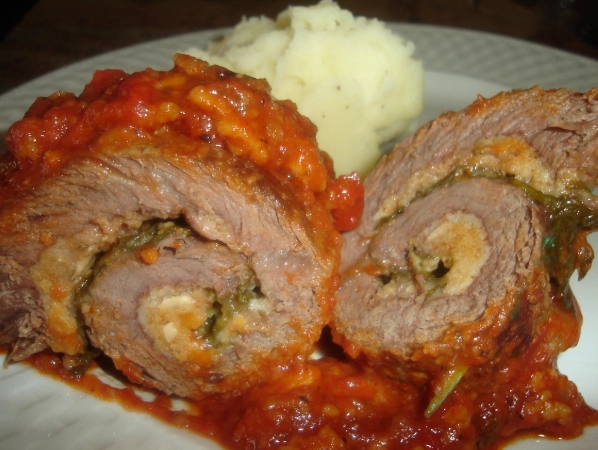
Make an American-style braciole if: You're feeding a crowd for a special Sunday dinner or holiday. You want a project that fills the house with an unforgettable aroma for hours. Your goal is to create an incredible pot of meat-infused tomato sauce for pasta. You're seeking a taste of Italian-American tradition and comfort food at its most celebratory.
Think centerpiece of a feast.
I love them both for different reasons. The Italian grilled pork chop is honest, simple, and satisfying. But the American braciole is an event. It's the smell of my childhood, the dish that makes everyone gather in the kitchen, wondering when it will be ready.
Final Thoughts: Embracing Both Worlds
Is there a difference between Italian and American braciole? Unequivocally, yes. Understanding that difference isn't about declaring one superior to the other. It's about appreciating the journey of a food idea. It's about respecting the authenticity of the original Italian preparations—from the grilled chops of the north to the stuffed rolls of the south—while also honoring the brilliant, delicious, and culturally significant adaptation that became a cornerstone of Italian-American family life.
The next time you see a recipe, take a second to see which world it's from. Is it calling for pork or beef? Grilling or a 3-hour braise? A light garnish or a pot of red gravy? That will tell you everything.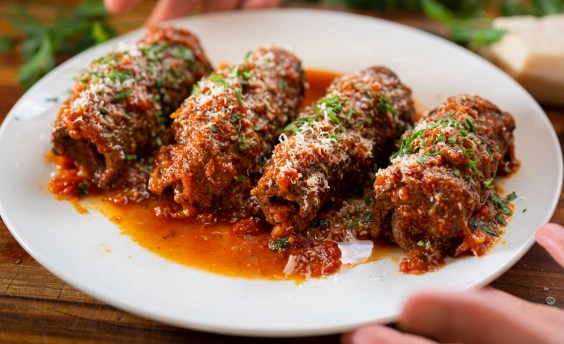
Maybe the best approach is to try both. Make some simple braciole di maiale (pork chops) with rosemary one night. Then, when you have a free afternoon, commit to the full American Sunday gravy experience—braciole, sausages, meatballs, the whole deal. You'll not only taste the difference, you'll feel it in the cooking process itself. One is a dish. The other is a tradition.
And that, perhaps, is the most beautiful difference of all.
Related Articles
The Ultimate Zesty Italian Pasta Salad Recipe (Make-Ahead & Crowd-Pleasing)

Top 10 Italian Cookies: A Guide to Italy's Sweetest Treats

Authentic Italian Antipasti Recipes: A Guide to Traditional Appetizers
A Typical Italian Dinner at Home: The Real Menu & Traditions
Easy Italian Baked Dinner Recipes: Lasagna, Chicken Parm & More