The Real Secret Ingredient in Minestrone Soup (It's Not What You Think)
Soup Navigation
- The Usual Suspects: What People THINK Is the Secret
- The Real Answer: It's a Symphony, Not a Solo
- The Practical Blueprint: Building Your Ultimate Minestrone
- Common Minestrone Mistakes (And How to Avoid Them)
- Regional Twists: Is There One "True" Minestrone?
- Your Minestrone FAQ Answered
- A Quick-Reference Guide: The Flavor Builders
You've probably asked this question a dozen times. You search online, flip through cookbooks, maybe even pestered your Italian friend's nonna. Everyone seems to have a strong opinion. Some swear by a specific herb. Others whisper about a mysterious cheese rind. And then there are those who just shrug and say "it's everything." Not helpful.
I've been there. I spent years making decent minestrone. It was fine. Warm, vegetable-y, hearty. But it never sang. It never had that deep, soulful, "I-want-another-bowl-immediately" quality I tasted once in a tiny trattoria in Bologna. So I went down the rabbit hole. I cooked, I researched, I messed up a lot of pots. And I think I finally cracked the code.
Here's the truth: asking what is the secret ingredient in minestrone soup is asking the wrong question. It implies there's one magic bullet. One hidden item you toss in and *poof* – perfect soup. Real Italian cooking doesn't work like that. It's about layers. It's about process. It's about a mindset, not a shopping list.
But since we all love a good secret, let's talk about the usual suspects. And then let's talk about what really matters.
The Usual Suspects: What People THINK Is the Secret
If you poll the internet, a few answers pop up again and again. Let's evaluate them, because some are closer to the truth than others.
Parmesan Cheese Rind (The Umami Bomb)
This is the crowd favorite, and for good reason. That hard, waxy end of a Parmigiano-Reggiano wedge is pure flavor gold. Tossed into the simmering broth, it slowly melts and releases glutamates – the compounds responsible for savory, mouthwatering umami. It adds a rich, nutty, salty depth that's hard to replicate.
Is it essential? No. Many traditional recipes don't mention it. But is it a brilliant hack that makes your soup incredibly delicious? Absolutely. If you want to explore the science of umami in cooking further, resources like the Serious Eats website often delve into these topics with great detail.
The "Battuto" or "Soffritto" (The Flavor Foundation)
This isn't one ingredient; it's a holy trinity. In Italian cooking, most savory dishes start with a battuto (chopped) of aromatic vegetables that becomes a soffritto (gently fried). For minestrone, it's almost always onion, carrot, and celery, diced finely and cooked slowly in good olive oil until soft and sweet, but not browned.
This step is non-negotiable. Rushing it is the #1 reason home minestrone tastes flat. You're not just softening veggies; you're building the first and most important layer of flavor. If your soffritto is anemic, your whole soup will be too.
Fresh Herbs vs. Dried (The Herb Conundrum)
Bay leaf, rosemary, thyme, sage. Some use a bundle (bouquet garni), some just throw in a sprig. The debate between fresh and dried is eternal. For a long-cooked soup like minestrone, a good quality dried bay leaf is perfectly fine—some say even better, as its flavor stands up to hours of cooking. Fresh rosemary, finely minced, added towards the end, can be a bright punch.
My take? Don't stress over this. Use what you have. The key is restraint. You're making a vegetable soup, not potpourri. One bay leaf. A tiny pinch of dried thyme. That's plenty.
So, we have great flavor builders. But we're still missing the core. To really understand the context of this dish, looking at its roots helps. The Academia Barilla, an institution dedicated to Italian gastronomy, emphasizes minestrone's origins as a "cucina povera" (poor kitchen) dish, which is crucial to understanding its philosophy.
The Real Answer: It's a Symphony, Not a Solo
After all my testing, here’s my conclusion. The closest thing to a single secret ingredient in minestrone soup is… time.
Let me explain.
Minestrone is not a 30-minute weeknight dump-and-go soup. It's a weekend project. A meditation. The magic happens in the slow, gentle coaxing of flavors from humble components.
- Time for the soffritto to sweat properly (at least 10-15 minutes on low heat).
- Time for the tomatoes to break down and lose their acidity.
- Time for the beans to become creamy and for their starch to thicken the broth.
- Time for the Parmesan rind, if using, to fully dissolve and integrate.
- Time for all the individual vegetable flavors to marry and become something greater than the sum of their parts.
Rush any of these steps, and you get a soup where you can taste the onion, then the carrot, then the bean. Let it take its time, and you get a harmonious, deep, unified flavor where no single vegetable shouts over the others.
The Practical Blueprint: Building Your Ultimate Minestrone
Forget rigid recipes. Think in layers and stages. Here’s how I build mine now, and it never fails.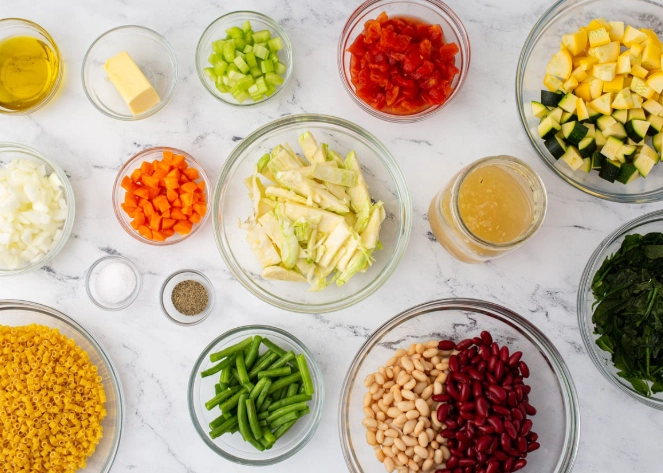
Stage 1: The Foundation (The Soffritto)
Fine dice one large onion, two carrots, and two celery stalks. Heat a generous glug of extra-virgin olive oil in your heaviest pot (a Dutch oven is perfect) over medium-low heat. Cook the veggies with a pinch of salt until they're translucent, sweet, and soft. This is the most important step. Don't rush it. If you see browning, the heat is too high.
Stage 2: The Body
Add a couple of minced garlic cloves for 30 seconds until fragrant. Then add a can of good-quality plum tomatoes, crushed by hand. Let this cook for a good 5-10 minutes, stirring occasionally, until the raw tomato smell is gone and the mixture looks darker and richer.
Stage 3: The Simmer
Now add your liquid – a good vegetable or chicken stock, or even just water if that's all you have. Throw in that Parmesan rind, a bay leaf, and a handful of dried beans (cannellini or borlotti) that you've soaked overnight. If using canned beans, add them much later. Bring to a very gentle simmer, partially cover, and walk away. For at least an hour. Go read a book.
Stage 4: The Vegetables (In Order)
This is crucial. Don't add all veggies at once. Add hardy ones first (potatoes, green beans cut small), let them cook 15-20 minutes. Then add quicker-cooking ones (zucchini, cabbage) for the last 10 minutes. This way, everything is perfectly cooked, not mushy.
Stage 5: The Finish
Fish out the bay leaf and any remnant of the cheese rind. Stir in a handful of small pasta (like ditalini) and cook until al dente. Important: If you think you'll have leftovers, cook the pasta separately and add it to each bowl. Otherwise, it bloats and ruins the soup overnight. Right before serving, stir in a massive handful of fresh chopped parsley and a final generous drizzle of your best, fruitiest extra-virgin olive oil. Taste for salt and pepper.
That final drizzle of raw olive oil? It’s not just garnish. It’s the flavor wake-up call, adding a fresh, peppery, aromatic note that cooked oil loses. It makes the soup taste alive.
Common Minestrone Mistakes (And How to Avoid Them)
I've made most of these. Learn from my errors.
- Overcrowding the Pot: Minestrone is hearty, but it's still a soup, not a vegetable stew. The ratio of liquid to solid matters. You need enough broth to keep everything suspended and soupy.
- Using Weak Stock or Water: If you use water, you're relying 100% on the vegetables for flavor. That's the traditional way, but it demands the best produce and perfect technique. For most of us, a good homemade or store-bought low-sodium stock is a safer bet for depth.
- Adding Leafy Greens Too Early: Spinach, kale, chard – they wilt in minutes. Add them in the last 5 minutes of cooking, just to soften. They turn to slime if overcooked.
- Neglecting Acidity: A long-cooked veggie soup can sometimes taste a bit flat or sweet. A tiny splash of good red wine vinegar or a squeeze of lemon juice at the very end can brighten everything up miraculously. Taste and adjust.

Regional Twists: Is There One "True" Minestrone?
No. And that's beautiful. In Genoa, they might add pesto at the end. In Milan, lard might start the soffritto instead of olive oil. In summer, it's lighter with fresh shell beans and basil; in winter, it's heavier with cabbage and potatoes. The Italian Ministry of Agricultural, Food and Forestry Policies even has a broad database of traditional agri-food products, highlighting the diversity of regional dishes like minestrone. This variability proves the point: the formula is flexible. The constants are the soffritto, the beans, the seasonal vegetables, and the slow cooking.
So, when you wonder what is the secret ingredient in minestrone soup, remember you're asking about a dish designed to be adaptable. The secret is the technique and the patience behind it.
Your Minestrone FAQ Answered
A Quick-Reference Guide: The Flavor Builders
To sum it all up, here’s what contributes to that elusive "secret" flavor.
| Component | What It Does | Pro Tip |
|---|---|---|
| Soffritto | Creates the sweet, aromatic flavor base. The non-negotiable first step. | Cook low & slow until soft, not colored. 15 minutes minimum. |
| Parmesan Rind | Adds deep umami, savoriness, and a hint of salt. A major flavor enhancer. | Freeze rinds from used cheese. Add at the start of simmering. |
| Tomato Paste (optional) | If added with the soffritto for a minute, it adds richness and color. | "Toast" it in the oil for 60 seconds to remove tinny flavor. |
| Herbs (Bay, Rosemary) | Adds subtle aromatic complexity without overpowering. | Less is more. One bay leaf is enough. Fresh rosemary at the end. |
| Final Drizzle of EVOO | Adds a fresh, peppery, fruity aroma that cooked oil loses. | Use your best bottle. This is where you taste the oil's quality. |
| Time & Patience | The true "secret." Allows flavors to meld and deepen. | Simmer partially covered for at least 1-2 hours. Don't rush. |
So, there you have it. The next time someone asks you what is the secret ingredient in minestrone soup, you can tell them it's not one thing. It's the care in the soffritto, the gift of a cheese rind, the order of operations, and the quiet patience of a slow simmer. It's about respecting the process as much as the ingredients.
Now go make a pot. Start it on a lazy Sunday afternoon. Let the house fill with that incredible smell. And taste the difference that a little secret called time makes.
Related Articles
Authentic Italian Carbonara Recipe: The Only Guide You'll Ever Need
Authentic Carbonara Recipe: How is Carbonara Originally Made?

Italian Seasoning Chicken Recipe: Easy, Flavorful & Authentic

Discover the Best Italian Chicken Dishes: A Complete List & Guide
Authentic Italian Family Meal Recipes: From Antipasti to Dolce