Italian Pizza Dough Ingredients: The Ultimate Guide for Perfect Crust
Quick Guide
Let's be honest. We've all been there. You follow a recipe for Italian pizza dough, measure everything perfectly, and end up with something that's either tough as cardboard or floppy like a wet napkin. It's frustrating. I remember my first attempt vividly—a dense, sad disk that my dog sniffed and walked away from. The problem, almost always, starts not with your technique, but with a fundamental misunderstanding of the Italian pizza dough ingredients themselves.
It seems too simple, right? Flour, water, yeast, salt. How can four basic things be so tricky? That's the magic and the curse of it. The beauty of authentic Italian pizza lies in this simplicity, but mastering it means respecting each component. It's not just a list; it's a balanced ecosystem. Get one wrong, and the whole thing feels off.
So, let's forget complicated recipes with ten additions for a second. Let's go back to the roots. This guide is about understanding those core ingredients for Italian pizza dough on a deep level. Why does the flour type make your knees weak with joy or disappointment? Why is your tap water possibly sabotaging your crust? We're going to break it all down, step by step, without the chef jargon.
The Core Four: Breaking Down the Italian Pizza Dough Ingredients
Every great Italian pizza dough begins with these four non-negotiables. Think of them as your team. Each player has a specific, crucial role.
- Flour: The structure. The body. It provides the protein (gluten) that traps gas and gives chew.
- Water: The activator. It hydrates the flour, allows gluten to form, and controls fermentation.
- Yeast: The engine. This living organism eats sugars and produces the carbon dioxide that makes the dough rise.
- Salt: The regulator. It strengthens gluten, controls yeast activity, and, most importantly, brings out flavor.
That's it. No sugar, no oil (in the most traditional Neapolitan style, anyway), no baking powder. The purity is intentional. It forces you to focus on quality and process. Now, let's get our hands dirty and look at each one under a microscope.
Flour: The Foundation of Everything
This is where most home pizza dreams go to die. Using all-purpose flour from the supermarket and expecting a pizzeria result is like trying to build a Ferrari with bicycle parts. It just won't work. The type of flour is the single most important choice you'll make.
Italian pizzaioli are obsessed with flour, and for good reason. They primarily use a finely milled, soft wheat flour called "Tipo 00." This "00" refers to how finely it's ground, not the protein content. Here's the kicker: not all 00 flours are the same. Some are weak (for cakes and pasta), and some are strong (specifically milled for pizza). You need the strong one.
What you're looking for is a protein content between 11.5% and 13%. This is the sweet spot. It's strong enough to develop a great gluten network for a chewy, airy crust (the famous "cornicione") but not so strong that your crust turns into a chewy bagel. Caputo is the most famous brand, and their "Pizzeria" flour is a global standard for a reason. It's consistent and reliable. I've tried cheaper brands, and the difference in texture and rise is noticeable—the dough feels less alive, more sluggish.
Here’s a quick comparison to clear the fog:
| Flour Type | Protein Content | Best For | Texture Result |
|---|---|---|---|
| Italian Tipo 00 (Pizza Specific) | 11.5% - 13% | Authentic Neapolitan & Roman style pizza | Light, airy, tender with a slight chew. Perfect cornicione. |
| Bread Flour | 12% - 14% | New York-style, Detroit-style, general bread baking | Chewier, stronger crust. More robust structure. |
| All-Purpose Flour | 9% - 11% | Cakes, cookies, quick breads, emergency pizza | Softer, more tender, less chewy. Can be cracker-like. |
| Whole Wheat Flour | 13% - 14% | Blending (use max 20-30% with white flour) | Denser, nuttier flavor. Can make dough heavy if used 100%. |
The takeaway? Invest in good flour. It's the backbone of your Italian-style pizza dough ingredients. A 1kg bag will make several pizzas, and the upgrade is worth every penny.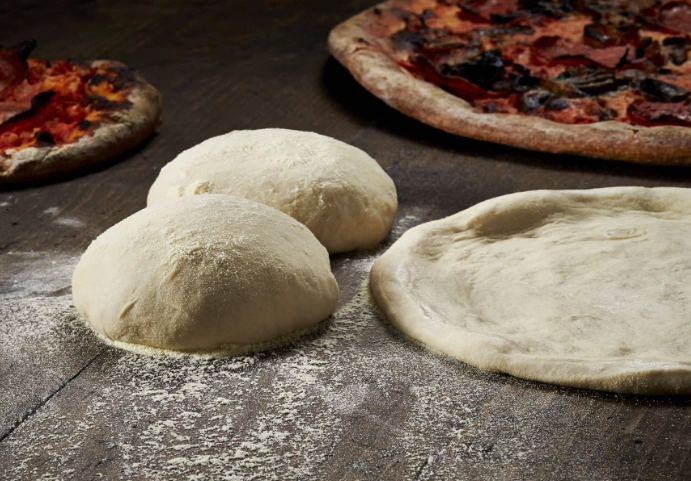
Water: The Silent Game Changer
Water feels like the most innocent ingredient, but it's secretly powerful. Its two main jobs are hydration and temperature control.
First, hydration. This is just a fancy word for how much water you use relative to flour, expressed as a percentage. A typical Neapolitan dough hydration is around 55-60%. That means for every 1000g of flour, you'd use 550-600g of water. Lower hydration (55-58%) makes a dough that's easier to handle, firmer, and gives a denser crumb. Higher hydration (60-65%) makes a stickier, more challenging dough, but it can yield a lighter, airier crust with more irregular holes. I find starting at 60% is a good balance for home ovens.
Now, temperature. This is a pro secret. Yeast is a living thing, and its activity is controlled by temperature. Use warm water (over 105°F/40°C), and you'll kill it. Use cold water, and it will sleep. The goal is to mix the dough so the final dough temperature is around 75-80°F (24-27°C). This encourages a steady, slow rise. I often use cool tap water, especially in summer, to keep things in check. A slow rise develops more complex flavors.
Yeast: The Living Ingredient
Yeast is your leavening agent. It's what makes the dough rise. You have options, and each behaves a little differently.
- Fresh Yeast (Cake Yeast): Loved by traditionalists. It's moist, perishable, and needs to be crumbled and dissolved. It gives a very clean, slightly faster fermentation. I find it tricky to find and store.
- Active Dry Yeast: The little granules you probably know. It needs to be "activated" in warm water (about 95-100°F/35-38°C) with a pinch of sugar before use. It's reliable and has a long shelf life.
- Instant Dry Yeast: My go-to for convenience. The granules are finer. The big advantage? You can mix it directly into the dry flour—no activation needed. It's also more potent, so you use about 25% less than active dry yeast.
For a classic, slow-fermented Italian pizza dough, you use a tiny amount of yeast. We're talking 0.1% to 0.3% of the flour weight for a long, cold ferment (24-72 hours). That's about 1-3 grams of yeast per kilo of flour! This slow rise is what builds incredible flavor. Using too much yeast gives you a fast, puffy rise with a bland, yeasty taste and a weaker gluten structure that might collapse.
My personal rule? For a same-day dough, I might use 0.5% yeast. But if I have time, I always opt for a 48-hour cold ferment in the fridge with just 0.2% instant yeast. The flavor difference is night and day.
Salt: The Flavor Savior
Never, ever forget the salt. I did once. The result was a bland, insipid crust that tasted like sweetened cardboard. It was awful. Salt is not optional.
In Italian pizza dough ingredients, salt typically makes up 2% to 3% of the flour weight. So, for 1000g flour, you'd use 20-30g of fine sea salt or kosher salt. Why?
- Flavor: This is the big one. It makes the wheat flavor pop.
- Gluten Strength: It tightens the gluten network, giving the dough more strength and elasticity.
- Yeast Control: It regulates yeast activity, preventing it from going wild and over-fermenting too quickly.
Use a good quality salt. Fine sea salt dissolves easily. Avoid iodized table salt if you can; it can sometimes impart a slight chemical taste. And always mix the salt with the flour before adding water. Never let the salt come into direct contact with the yeast in its concentrated form, as it can kill it.
The Foolproof Recipe & Process
Alright, theory is great, but let's get practical. Here is a balanced, forgiving recipe for a home kitchen. This makes about 4 medium (250g dough ball) pizzas. The key is weighing. Cups are inconsistent. Use a kitchen scale—it's the best $20 you'll spend for baking.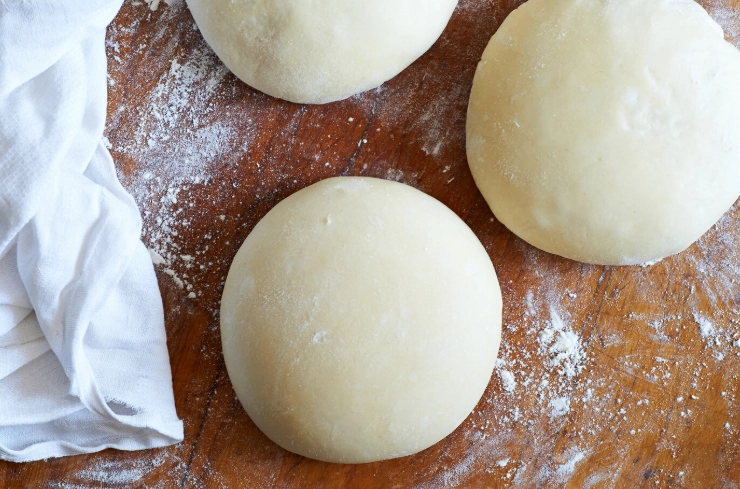
| Ingredient | Weight | Baker's Percentage | Notes |
|---|---|---|---|
| Italian Tipo 00 Flour (or Bread Flour) | 1000g | 100% | The foundation. Caputo Pizzeria is ideal. |
| Water | 600g | 60% | Cool water, about 60-65°F (16-18°C). |
| Fine Sea Salt | 25g | 2.5% | Adds flavor and strength. |
| Instant Dry Yeast | 2g | 0.2% | For a slow, 48-hour ferment. Double for same-day. |
Step-by-Step: Mixing, Kneading, Fermenting
1. Mixing: In your large bowl, whisk the flour, salt, and yeast together. Make a well in the center and pour in about 80% of the water. Start mixing with a spoon or your hands. Gradually add the remaining water until all the flour is hydrated. It will be shaggy and messy. That's fine.
2. Autolyse (Rest): This is a secret weapon. Just let the shaggy mass sit, covered, for 20-30 minutes. During this time, the flour fully hydrates and gluten starts forming on its own. When you come back, the dough will already be smoother and less sticky. It makes kneading much easier.
3. Kneading: Turn the dough out onto a very lightly floured surface. Knead for about 8-10 minutes. You're not trying to beat it up. Use a gentle push-fold-turn motion. The dough is ready when it's smooth, slightly elastic, and passes the "windowpane test": you can stretch a small piece thin enough to see light through it without it tearing immediately.
4. Bulk Fermentation (First Rise): Place the dough ball in a lightly oiled bowl, cover tightly with plastic wrap or a damp cloth, and let it rise at room temperature. With our tiny amount of yeast, this will take 4-6 hours, or until roughly doubled. You can also put it straight into the fridge for a cold bulk ferment for 24-72 hours (this is my preferred method for flavor).
5. Dividing and Balling: Gently turn the dough out. Don't punch it down—you want to preserve those gas bubbles. Divide into 4 equal pieces (about 405g each). To form a dough ball, pull the edges of a piece down and pinch them together at the bottom, creating a smooth, tight skin on top. This surface tension is crucial for a good oven spring.
6. Proofing (Second Rise): Place each ball seam-side down in a separate, lightly oiled container or on a tray with plenty of space. Cover. Let them proof at room temperature for another 2-4 hours until puffy, or refrigerate for up to 2 more days. If refrigerated, take them out 2-3 hours before baking to warm up.
Now your dough, built from these perfect Italian pizza dough ingredients, is ready to be stretched, topped, and baked into glory.
Answering Your Dough Dilemmas: Common Questions
Even with the best ingredients, questions pop up. Here are the ones I get asked all the time.
Wrapping It Up: Your Ingredient Checklist
So, what's the final shopping list for mastering Italian pizza dough ingredients?
- Flour: 1kg of strong Italian Tipo 00 flour (like Caputo Pizzeria) or good bread flour.
- Water: 600g of cool, clean water (filtered if your tap water is strong).
- Salt: 25g of fine sea salt or kosher salt.
- Yeast: A small jar of instant dry yeast (it lasts forever in the fridge).
With these four humble ingredients, patience, and a scale, you have everything you need to create pizza that rivals your favorite spot. It's not about fancy gadgets or secret additives. It's about understanding the role of each component in your ingredients for Italian pizza dough and treating the process with respect.
Start with the recipe above. Make notes. Did you like the 60% hydration? Try 62% next time. Was the crust not chewy enough? Maybe try a bread flour blend. This is a personal journey. Your perfect dough is waiting to be discovered, one gram and one hour of fermentation at a time.
Now go on. Get some flour on your hands.
Related Articles
Simple Italian Sausage Recipes for Dinner: Easy & Flavorful Family Meals
Ultimate Vegetarian Pasta Recipes: Flavorful & Easy
Proper Italian Meatballs Recipe: Authentic Tips & Secrets
Authentic Italian Cream Cake Recipe: Moist, Nutty & Irresistible

The number has increased nearly fourfold in ten years, and the global digital ba